
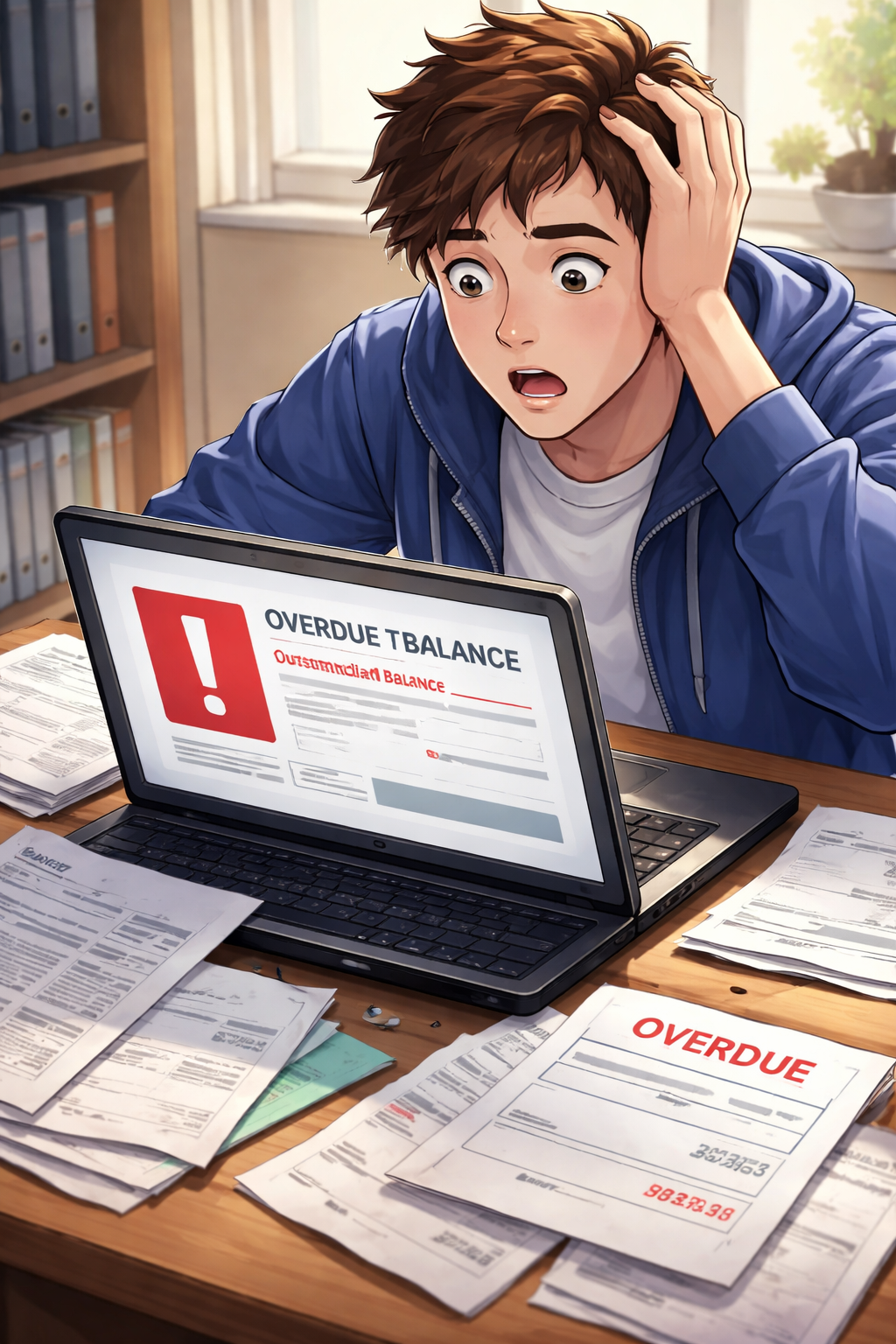
Tuition Payment Posted but Later Reversed Without Notification is the kind of problem that usually starts with a quick login you did not expect to matter. Maybe you were checking whether your class registration opened. Maybe you were looking for a refund update. Maybe you only wanted to make sure the balance was still zero before moving on. Then you saw it. The payment that had already posted was no longer holding your account in place. The balance had returned, and the account looked like the payment either never happened or had quietly been pulled back out of the ledger.
That moment is what makes this situation so unsettling. You already did the part that was supposed to solve the problem. You made the payment. You saw it post. You thought the account was handled. Then, without a warning email, without a call, and sometimes without even a note in the transaction history that makes sense to a normal person, the school’s billing system changed the story after the fact. When that happens, you are not just dealing with a payment issue. You are dealing with a systems issue that can trigger deadlines, holds, and escalation before you even realize the account is exposed again.
If you want the broader framework first, this hub explains how tuition billing errors usually form and why they often do not look like “errors” from the school’s side:
What This Situation Usually Looks Like in Real Life
Tuition Payment Posted but Later Reversed Without Notification does not always look dramatic at first. In many cases, the student or parent only notices one of these signs:
- The account had shown a lower balance, but the old amount is back.
- A payment still appears in bank history, but the school account no longer reflects it.
- The payment line is missing entirely, or it now shows wording like reversed, adjusted, removed, or corrected.
- A registration hold appears even though the account had seemed current a day or two earlier.
- A late fee shows up after the payment was already visible on the portal.
The danger is that these signs often appear after the school has already resumed treating the balance as unpaid. From the system’s perspective, once the payment is reversed, the clock does not restart for you. The account simply goes back into the unpaid path.
Why A Posted Payment Can Be Reversed Later
Tuition Payment Posted but Later Reversed Without Notification usually happens because the school’s billing environment is not a single, clean, real-time system. Most colleges and universities operate across several connected layers. One layer may accept the payment intake. Another layer may post it to the student ledger. Another layer may reconcile whether that posting was valid. Another may control registration eligibility or collections routing. What looks final to you may only have been provisional inside the system.
That is why a payment can appear to be done and then disappear later. Common backend reasons include:
- The payment gateway initially accepted the transaction, but the final settlement later failed.
- The payment was posted to the wrong term or wrong account and then removed during reconciliation.
- The system flagged the payment as a duplicate after the fact.
- An ACH or bank draft looked successful at first but later returned through the settlement cycle.
- The school placed the transaction under internal audit review and temporarily backed it out.
- The payment was reallocated to a prior balance without clear front-end explanation.
- A payment plan or third-party billing arrangement was updated, causing the ledger to recalculate.
In other words, Tuition Payment Posted but Later Reversed Without Notification is often the result of back-office correction logic, not a front-facing mistake screen. That is why students get blindsided by it.
The Most Important Question: Which Version of This Problem Are You In
One reason this issue drags on is that people treat all reversals the same. They are not the same. The correct response depends on which path created the reversal.
If your bank shows the payment fully completed and the school removed it anyway:
You may be dealing with an internal ledger reversal, account mapping issue, or payment reallocation problem. This is often fixable, but only if you force the school to identify the transaction path in writing.
If the school shows the payment reversed and your bank later shows a return:
You may be dealing with an actual settlement failure. In that version, the school may not restore the posting unless a new valid payment is made or the bank error is corrected.
If the payment disappeared and the balance moved to a previous semester:
You may be dealing with term reapplication rather than a true reversal. The money may still be inside the student account system, just not where you expected it.
If the payment disappeared and a hold appeared almost immediately:
The billing system may already be linked to the registration or transcript enforcement layer. This is urgent because operational consequences have already started.
If the payment disappeared after aid, sponsorship, or third-party billing activity changed:
The system may have recalculated charges and credits together, which can make a payment look reversed when the actual issue is coordination between funding sources.
You should not approach all five of these situations with the same script. The school may answer vaguely unless you ask the exact question that matches the actual path your account is on.
What Schools Usually Say Versus What Is Actually Happening
When people contact the bursar after Tuition Payment Posted but Later Reversed Without Notification, they often hear language that sounds simple but hides the real issue:
- “It looks like the payment did not clear.”
- “The account updated automatically.”
- “There was a correction in the system.”
- “Please allow time for processing.”
- “You should contact your bank.”
Sometimes those statements are true. Sometimes they are only partial truths. Schools often answer from the surface layer they can see quickly, not from the root cause. The front office may only know that the posted amount is gone. They may not know whether the reversal came from bank settlement, duplicate detection, audit review, manual adjustment, prior-term reallocation, or a third-party billing change.
This matters because a vague answer can push you into the wrong next step. If you pay again too fast, you may create a second transaction on top of a bookkeeping error. If you wait too long, a real failed payment may age into fees and enforcement. If you only ask, “Why is my balance back?” you may get a generic answer that does not protect you.
What You Need to Ask Right Away
If you are facing Tuition Payment Posted but Later Reversed Without Notification, do not start with a broad complaint. Start with precise questions that force the system path into the open.
- Was the payment reversed because of external bank return, internal audit, duplicate detection, or term reallocation?
- What date and time was the payment first posted to the student ledger?
- What date and time was it reversed or removed?
- Did the funds leave my bank or card account successfully?
- Was the payment moved to another term, another charge group, or another student account line item?
- Has any hold, late fee, or collections status been triggered because of this reversal?
- Can you confirm in writing whether the account is currently considered delinquent?
The goal is not to sound aggressive. The goal is to stop the school from leaving your account in a gray zone while deadlines continue in the background.
What To Collect Before the Problem Gets Harder
Tuition Payment Posted but Later Reversed Without Notification becomes much easier to resolve when you preserve proof before the portal changes again.
Collect these immediately:
- Bank or card proof showing the transaction amount and date
- Any confirmation email or receipt from the payment processor
- Screenshots of the student portal showing the current balance and transaction history
- If you have it, earlier screenshots showing the payment when it was posted
- Any hold notices, registration warnings, or late fee entries that appeared after the reversal
- Any correspondence with bursar, student accounts, or cashiering staff
That documentation matters because portal history is not always stable. Sometimes schools overwrite transaction displays instead of preserving a student-friendly audit trail. If the evidence disappears from the portal, your own records may become the only clean proof of sequence.
Detailed Paths This Problem Can Take
Path 1: Temporary posting, then bank settlement failure
The payment shows as posted because the intake system accepted it. Later, the bank settlement fails. The school reverses the payment. In this version, you need confirmation of the return reason and the fastest valid replacement payment option.
Path 2: Posted correctly, then moved to prior charges
The money did not vanish. It was redirected to an older term or older balance bucket. The current term now looks unpaid, even though the overall account did receive funds. In this version, you need an itemized ledger explanation, not a generic “reversal” answer.
Path 3: Duplicate or suspicious transaction flag
A system rule may have treated the payment as duplicate, high-risk, or inconsistent. The school may freeze, back out, or review the transaction without notifying you first. In this version, ask whether the payment is under review and whether the hold can be paused during verification.
Path 4: Manual correction after staff review
A staff member may have determined the payment was applied incorrectly and manually reversed it. In this version, you need the exact reason, who made the correction, and where the funds were intended to go.
Path 5: Third-party billing or aid interaction
When employer reimbursement, sponsorship, outside agency billing, or financial aid changes hit the account, the system can recalculate student responsibility. That can cause posted amounts to be adjusted, displaced, or seemingly reversed. In this version, you need the recalculation explanation, not just the transaction status.
This is why Tuition Payment Posted but Later Reversed Without Notification should never be treated as a one-line portal problem. It is usually a chain problem.
If you need the deeper mechanics behind how posting, batch timing, and ledger allocation interact, this article fills in the backend logic:
What Students and Parents Often Do Wrong
Most people do not make things worse because they are careless. They make things worse because the portal makes the problem look smaller than it is.
- They wait for an email that never comes.
- They assume the system will self-correct overnight.
- They call once, hear “processing,” and stop documenting.
- They pay again immediately without understanding the first reversal.
- They focus only on the missing payment and fail to ask whether a hold or collections path has already started.
By the time the real damage becomes visible, the account may already have crossed a deadline that is hard to undo.
When This Can Turn Into Holds, Fees, or Collections
Tuition Payment Posted but Later Reversed Without Notification can escalate fast because school systems do not pause downstream actions just because the student is confused. If the ledger now reads unpaid, the next system may act on that status automatically.
- Registration may be blocked for the next term.
- Transcript release may be suspended.
- A payment plan may default.
- Late fees may stack even though you believed the account had been resolved.
- The account may move toward collections review if the balance ages.
That is why you need written confirmation not only of the payment status, but of the account status. Those are not the same thing. A school can still be “reviewing” the payment while your account is already treated as delinquent.
If your account is close to that line, this next guide is the right action-focused follow-up:
For official guidance on how billing errors and payment issues should be handled, see the Consumer Financial Protection Bureau resource here:
FAQ
Can a tuition payment really show as posted and then be removed later?
Yes. A posted status may reflect initial acceptance, not final settled status across every connected system.
Does reversal always mean the payment bounced?
No. It can also mean internal correction, reallocation, duplicate review, or audit action.
Should I just make another payment right away?
Not until you confirm what happened to the first one. Otherwise you can create a second problem on top of the first.
Can the school place a hold while the payment issue is unresolved?
Yes. Many systems continue to treat the account as unpaid unless a manual exception is entered.
What matters most in the first 24 hours?
Proof, screenshots, written clarification, and confirmation of whether the account has already entered a hold or escalation path.
Key Takeaways
- Posted does not always mean final.
- Silent reversals often come from backend reconciliation, not obvious front-end errors.
- You need to identify which reversal path your account is actually in.
- Written confirmation matters more than a vague verbal explanation.
- The real risk is not only the missing payment, but what the account status triggers next.
Tuition Payment Posted but Later Reversed Without Notification feels small when it first shows up because it begins as a change on a screen. But that is exactly why people lose time on it. It does not feel urgent until the hold appears, the fee posts, or the deadline closes around the account. By then, what should have been a clean correction has turned into a much more expensive problem.
You do not need to guess what happened, and you should not wait for the system to explain itself later. Pull your bank proof, save the portal history, ask the school which reversal path was triggered, and get written confirmation of the account’s current enforcement status now. That is the move that protects enrollment, keeps the issue from snowballing, and gives you the best chance of fixing the account before the school’s next system takes action.