
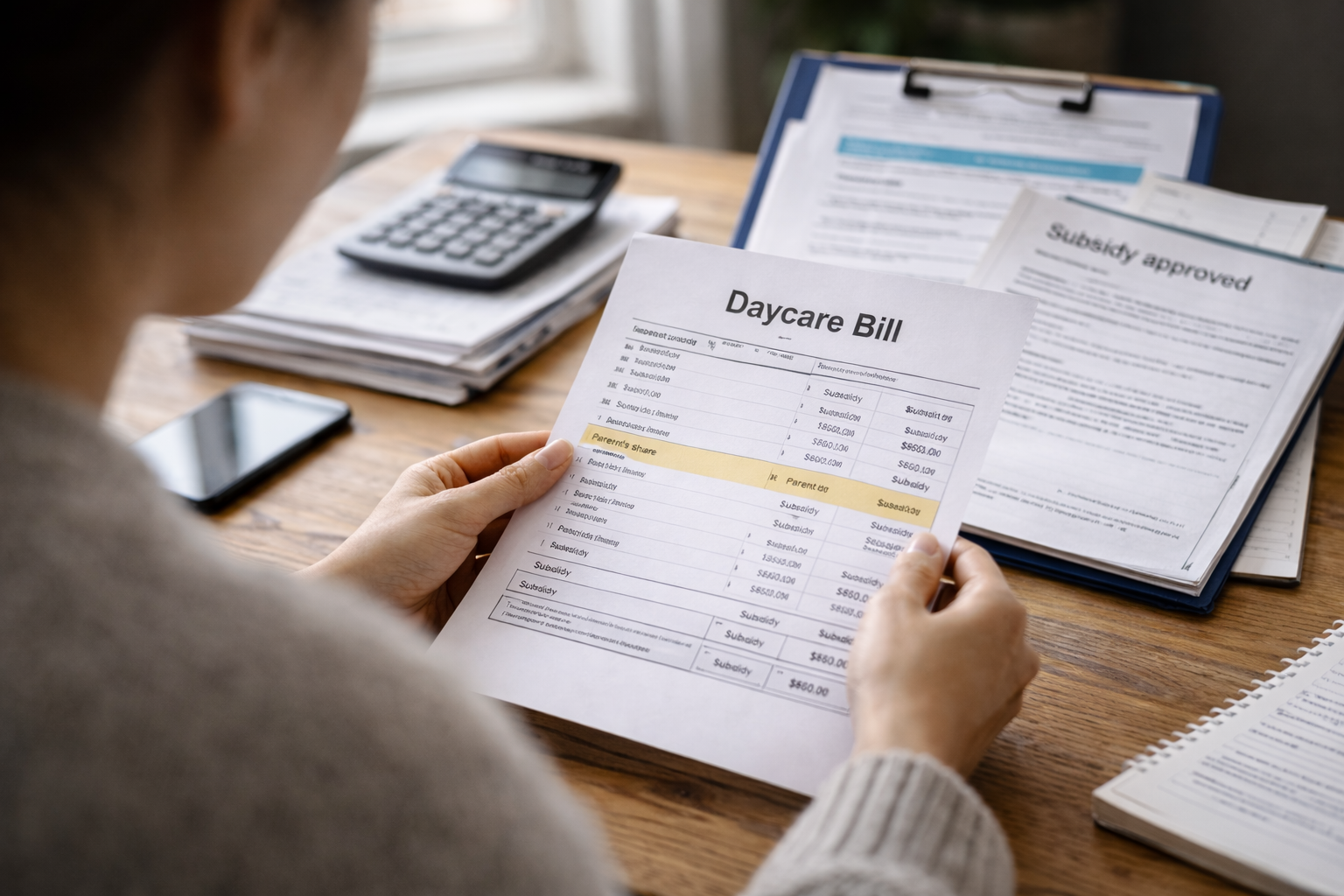
Childcare subsidy billing error what to do usually starts with a number that looks wrong before you even know why it’s wrong. You open the childcare statement expecting your normal parent portion. Instead, the balance due is higher, the subsidy line is missing, or a credit that was there last month suddenly isn’t.
You don’t melt down. You just feel that tight, practical panic parents get when a “small billing issue” can turn into a bigger problem fast. You check your messages from the subsidy program. You check your bank. You check the daycare app. And the more you check, the more obvious it becomes: the system isn’t matching what you were told. If you’re here because childcare subsidy billing error what to do is exactly what you need, this guide focuses on clear actions—starting now—without turning it into a lecture.
Before you go deep, one quick note: if your bill shows a higher parent portion than expected (even though the subsidy still appears), this related guide can save you time.
This is the closest “hub” issue when the subsidy is present but the amount feels wrong.
Why These Errors Happen (Without Blaming Anyone)
Most families assume the subsidy program and the childcare center are “connected.” In reality, subsidy billing often relies on multiple steps: eligibility approval, authorized hours, attendance reporting, and the childcare center’s billing system applying the correct credit. When any step updates late—or updates but doesn’t sync—the bill can break.
Common triggers behind a childcare subsidy billing error what to do situation include:
- Renewal or redetermination processed later than expected
- Authorized hours changed (or were re-calculated)
- Attendance hours reported differently than you assume
- Provider billing system not updated with new authorization
- Backdated eligibility that hasn’t been credited yet
Here’s the hard truth: the bill can be wrong even if no one is “lying.” That’s why your best move is to treat this like a verification problem, not an argument.
Start Here: A 60-Second Self-Check
When you see childcare subsidy billing error what to do on your screen, use this quick self-check to avoid chasing the wrong fix:
- Is the subsidy line missing entirely, or is it present but smaller?
- Did your child’s schedule change (hours/days) recently?
- Did you renew the subsidy, update income, or submit documents recently?
- Is the balance due new this month, or did it quietly build over time?
- Did the center mention “pending authorization” or “waiting on the program”?
Your goal is to identify what changed. Most billing errors are triggered by one specific change that didn’t carry through all systems.
Which Situation Matches Your Billing Error?
Most childcare subsidy billing issues fall into a few patterns. Read these like you’re matching symptoms. If two feel close, pick the one that matches your timeline (what changed and when).
Case A: Your Subsidy Was Approved, But the Bill Shows Full Tuition
You have an approval notice or portal status showing you’re eligible, but the center is billing you as if you have no subsidy at all. This is a classic childcare subsidy billing error what to do moment.
- Confirm the subsidy start date and provider/center name on the approval notice.
- Ask the subsidy office: “Has authorization been issued to this provider?”
- Ask the center: “Have you received the authorization letter or electronic notice?”
Fastest fix: provider receives official authorization and applies it retroactively to the correct dates.
Parent trap: calling only the center repeatedly without confirming the subsidy office issued authorization to that specific provider.
Case B: The Subsidy Is There, But Your Parent Portion Suddenly Increased
The subsidy line appears, but your share is higher than last month. Parents often assume the center changed prices, but the cause is often a recalculation upstream.
- Check if your authorized hours changed (full-time vs part-time, fewer days, etc.).
- Ask the subsidy office: “Was my family fee or co-pay recalculated?”
- Confirm whether a renewal, income update, or household update triggered a new rate.
Fastest fix: confirm the new authorized hours/fee and ask the center to re-run billing for the correct week range.
Parent trap: disputing the center’s bill without checking whether the program changed your authorized coverage amount.
Case C: The Subsidy Was Applied, Then Reversed (Credits Disappeared)
This one feels especially unfair. A credit was there, then it vanished. The bill now shows a balance due that you didn’t expect. This is often a “status changed” event, not a simple billing typo.
- Ask the subsidy office for the reversal reason (missing documents, eligibility lapse, provider mismatch, etc.).
- Check for communications you may have missed (requests for verification are common).
- Ask the center whether they received a clawback notice or adjustment notice.
Fastest fix: resolve the underlying eligibility issue (documents/renewal), then request re-application or retroactive correction if allowed.
Parent trap: paying the reversed amount immediately without first confirming whether the reversal is temporary and correctable.
Case D: Your Subsidy Is Pending, and the Center Is Billing You the Full Amount
Your application is under review, but the bill is due now. The center may be following policy (they still need to operate), but you need clarity on how credits work once approved.
- Ask the center: “If subsidy is approved later, will credits be applied retroactively?”
- Ask the subsidy office: “What is the expected timeline and can this be expedited?”
- Document your submission dates and any confirmation numbers.
Fastest fix: get a written understanding of how retroactive credits work, and what happens if approval is delayed.
Parent trap: assuming “pending” means you can ignore the bill. Some centers will restrict care if balances grow.
Case E: The Center Says the Subsidy Doesn’t Match Attendance (Hours/Days Dispute)
Sometimes the subsidy amount is correct on paper but doesn’t match how attendance was reported. A missed sign-in/out, a schedule change, or a holiday week can create a mismatch.
- Ask the center for attendance logs or time records for the weeks billed.
- Confirm your authorized schedule and whether changes were reported.
- If the program requires strict attendance reporting, ask what corrections are allowed.
Fastest fix: correct attendance records (if allowed) and request a rebill for the affected weeks.
Parent trap: treating it like “just billing” when the system is actually responding to attendance compliance rules.
What To Do First (The Order That Prevents Weeks of Delay)
If childcare subsidy billing error what to do is your exact problem, this order saves time:
- Collect proof: subsidy notice/portal status + last two statements + any messages about renewal or documents.
- Request itemization: ask the center for an itemized statement showing dates, rates, subsidy credit, and parent portion.
- Confirm authorization: call the subsidy office to confirm provider authorization, start date, and authorized hours.
- Bring it back to the center: share the confirmed details and ask for a corrected bill/credit timeline.
Do not start by arguing about the total amount. Start by aligning dates, hours, and authorization.
What Not To Do (Mistakes That Quietly Make It Worse)
- Paying the full unexpected balance without first confirming whether the correction will be retroactive
- Waiting until the next statement “to see if it fixes itself”
- Only calling one side (center or program) repeatedly without confirming the missing link
- Sending long emotional messages instead of requesting the specific billing components
Most systems respond faster to specific facts than to frustration. You can be firm without being messy.
When This Turns Into a Hold or Enrollment Block
In some systems, a billing mismatch can snowball into a restriction. If a balance remains unresolved, you may see warnings, late notices, or service restrictions. That’s why acting early matters when you’re dealing with childcare subsidy billing error what to do.
If you start seeing restrictions or holds tied to balances, this guide helps you understand the next step.
This explains what to do if billing issues start triggering holds or blocks.
External Reference (Official)
This is an official U.S. government resource related to child care assistance programs and how they work.
Key Takeaways
- Childcare subsidy billing error what to do is usually a systems mismatch (authorization, hours, or timing), not a permanent decision.
- Align dates + authorized hours + provider authorization before arguing about totals.
- Request an itemized statement and confirm details with the subsidy office first.
- Act early to prevent holds, restrictions, and compounding balances.
FAQ
Should I pay the extra balance while waiting for correction?
Only if you have written clarity on how credits/refunds will be applied. Paying without clarity can complicate reversals and tracking.
How long do subsidy billing corrections take?
Some corrections are quick (days) if it’s a provider billing update. Eligibility or authorization issues can take longer depending on the program’s timeline.
What if the center says it’s not their problem?
Ask what information they need to apply the subsidy (authorization letter, provider ID confirmation, start date, hours). Then confirm those items with the subsidy office and provide them.
What if the subsidy office says it’s applied but the center bill shows otherwise?
Request written confirmation (email/portal screenshot) and ask the center to verify their provider authorization record and billing sync timing.
Your Next Step
If you came here because childcare subsidy billing error what to do is happening right now, don’t wait for the next statement cycle.
Today: request an itemized statement and confirm your authorization details with the subsidy office.
Most subsidy billing errors are fixable. The difference is whether you act while it’s still a correction—or wait until it becomes a bigger billing dispute.
If your situation involves credits being removed after they were already applied, this is the most relevant next read.
This focuses on what to do when a subsidy payment is reversed or pulled back.