
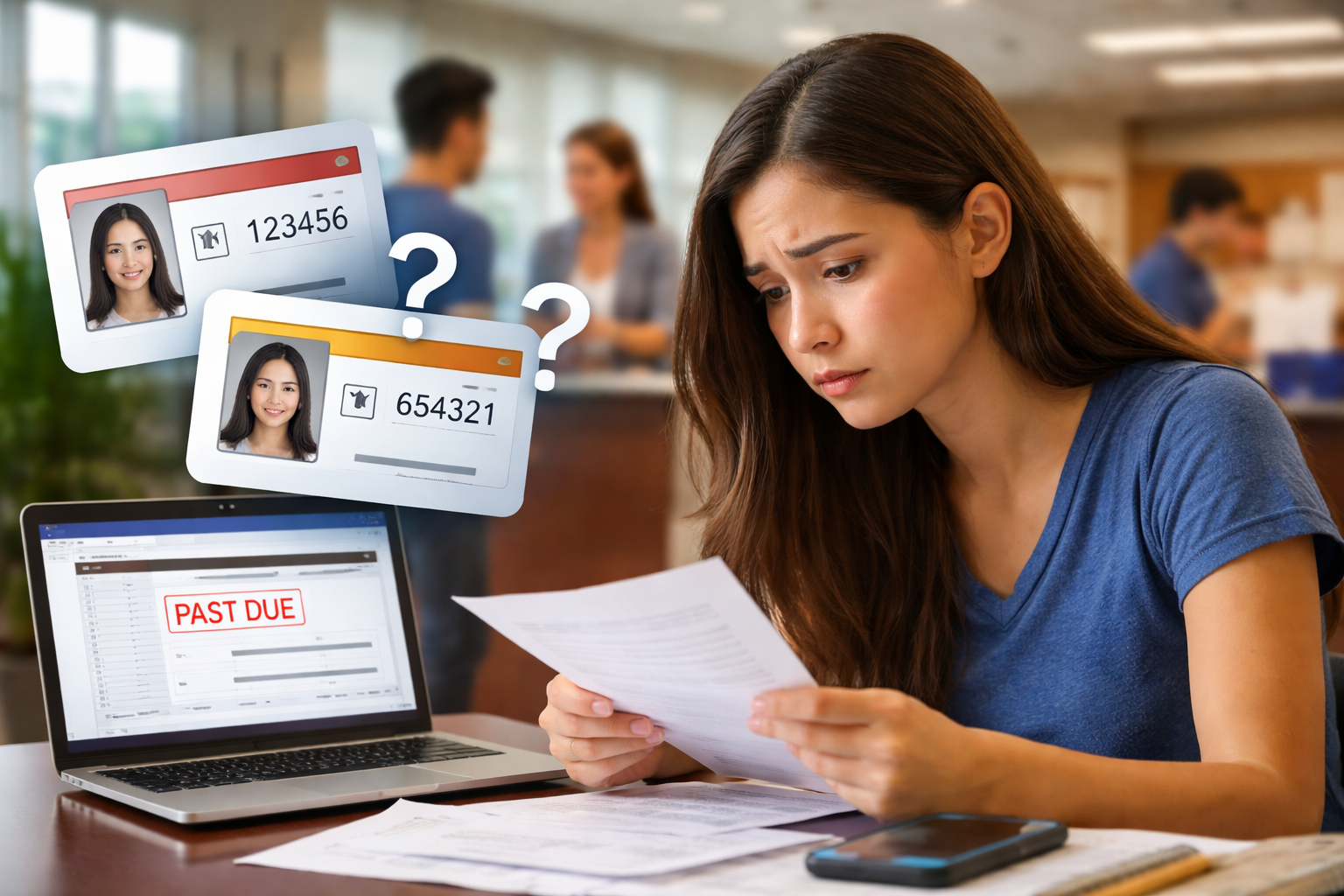
Tuition payment received under different student ID causing account mismatch and balance error was not something I noticed while making the payment. Everything looked normal at first. The receipt came through, the bank transaction showed complete, and there was no immediate warning anywhere. The problem showed up later, in the most damaging way possible, when the student portal still showed an unpaid balance and registration access suddenly became uncertain.
At first, it looked like a normal delay. That is what makes this situation dangerous. A lot of families wait because they assume the school system just needs another business day to catch up. But tuition payment received under different student ID causing account mismatch and balance error is not the same as a routine posting delay. The money may already be inside the institution, while the student account still moves through hold logic, late fee logic, and past-due logic as if no payment was ever made.
When the money exists but is linked to the wrong record, the billing system can keep escalating the account even though the payment itself is real.
If you want the broader background first, this hub gives the closest overview of how college billing errors escalate and why they become more serious than they first appear.
What This Situation Usually Looks Like In Real Life
Tuition payment received under different student ID causing account mismatch and balance error usually does not begin with a dramatic message from the school. It often begins with something small: a balance that does not update, a registration block that seems inconsistent, an account hold that makes no sense, or a bursar representative saying they can see a payment but cannot see it on the student ledger that actually controls enrollment status.
That mismatch is the core of the problem. One part of the institution may see the money, while another part only sees the billing record attached to the active student ID. In practical terms, that means the payment can be real but operationally useless until someone manually fixes the account mapping.
This is why people feel like the school is contradicting itself: one office says the payment exists, while the portal still shows a balance due.
Why Schools End Up With This Kind Of Payment Mismatch
Tuition payment received under different student ID causing account mismatch and balance error usually comes from the handoff between systems, not from one simple typo alone. Colleges often rely on multiple layers: payment portal, student information system, bursar ledger, registration controls, and sometimes outside processors or third-party sponsorship systems. If one layer uses the wrong identifier, the rest of the system may never treat the payment as usable against the correct account.
Sometimes the wrong ID is entered during payment. Sometimes a student has an old record and a current record. Sometimes a parent has more than one child in the portal and chooses the wrong profile. Sometimes a third-party payer submits the correct amount but incomplete student identifiers. Sometimes the school itself imports a payment into a suspense or unapplied bucket because the match confidence is too low.
That is why tuition payment received under different student ID causing account mismatch and balance error can sit unresolved longer than people expect. The institution may not think of it as “missing money.” Internally, it may look more like “unresolved money.” That distinction matters because unresolved money does not always trigger urgent action unless the student pushes for a manual trace.
The Most Common Branches Of This Problem
Branch 1: Parent Or Family Paid Under The Wrong Student Profile
This is common when a household has siblings at the same school, or when a parent uses a saved portal login with multiple accounts. The amount is correct, the date is correct, and the bank record is correct. But the payment lands on another student’s ID or an inactive profile. In this branch, tuition payment received under different student ID causing account mismatch and balance error often looks confusing because the payer insists everything was entered correctly, while the school insists the student account remains unpaid.
Branch 2: Duplicate Or Legacy Student Record
A student may have more than one institutional identifier due to readmission, transfer processing, system migration, name changes, or onboarding errors. The payment goes to one ID, but the live tuition ledger is tied to another. In this branch, the school may actually find the payment quickly, but the account status remains wrong until someone reassigns it.
Branch 3: Third-Party Or Sponsored Payment With Weak Matching Data
If a scholarship source, employer, state program, or sponsor sends payment without the exact identifier structure the school expects, the payment can be received but not automatically applied. This branch becomes even riskier when the student assumes sponsorship means the balance issue is not their problem, while the school system keeps flagging the account as unpaid.
Branch 4: Manual Bursar Entry Or Import Error
Sometimes the institution itself creates the mismatch. A staff member may enter or import the payment under the wrong record, or a batch file may map it incorrectly. In this branch, tuition payment received under different student ID causing account mismatch and balance error can survive multiple calls because each office sees only part of the data.
Branch 5: Payment Applied Somewhere Real But Operationally Unusable
The payment may be sitting in an unapplied cash ledger, temporary suspense account, or pending exception queue. It is technically in the school’s possession, but not tied to the student account that controls holds, deadlines, and registration permissions. This is often the branch people misunderstand most.
How To Tell Which Branch You Are In
Not every balance problem after payment means tuition payment received under different student ID causing account mismatch and balance error. Some are simple portal delays. Some involve bank returns. Some involve allocation to prior balances. The way to separate them is to ask very specific questions and compare the answers carefully.
If the bursar can see the payment amount and date but says it is not applied to the student ledger, that strongly points toward a mapping or account-link issue. If the school says it cannot find the payment at all, the issue may be different, though the wrong ID is still possible. If the payment confirmation includes a student number that does not match the active account, the problem becomes much clearer. If the account shows a credit on a different profile, then the mismatch is almost certainly already proven.
The fastest progress usually comes when you stop asking whether the payment was “received” and start asking exactly which student ID currently holds the payment record.
If your portal looks stuck rather than clearly wrong, this related page may help you compare the symptoms.
What The School System Often Does While You Wait
This is the part many families underestimate. Tuition payment received under different student ID causing account mismatch and balance error does not necessarily pause the rest of the institution’s automated actions. The account may continue through late-fee rules. A registration hold may still post. Housing-related permissions or class access rules may still be affected. If the semester timing is tight, the student may lose priority access or face a deadline consequence before the internal mapping fix is completed.
That is why this issue feels so unfair. The family’s position is simple: the money was already paid. But the school system often evaluates only the active account status, not the broader reality that the institution already has the funds somewhere else. That disconnect is exactly what makes tuition payment received under different student ID causing account mismatch and balance error more serious than an ordinary posting delay.
From the student side, it feels like a payment problem. From the system side, it behaves like an unpaid-account problem until corrected.
What You Should Ask For Right Away
When tuition payment received under different student ID causing account mismatch and balance error is suspected, vague conversations waste time. A better approach is to request an account-level payment trace using the payment date, amount, transaction number, payer name, and the student ID that should have received the credit. Ask the bursar office to confirm whether the payment is attached to another student record, another internal identifier, or an unapplied ledger bucket.
Also ask whether any hold, late fee, or account restriction can be temporarily suppressed while the trace is under review. This matters because the correction itself may take time even after the payment is found. If the institution can see the payment, it becomes much harder for them to justify letting the account continue to escalate unchanged.
You are not asking for special treatment. You are asking for the account status to reflect reality. The institution either has the money or it does not. If it has the money, the student should not be treated the same as someone who never paid at all.
Self-Check Before You Contact The Bursar
Use this quick self-check before you call or email:
- Does the receipt show the exact amount that was due?
- Does the receipt show the correct payment date?
- Does it list a student name or ID, and is that information correct?
- Was the payment made from a parent or third-party account with access to multiple students?
- Has the student ever had an old ID, readmission record, or prior institutional profile?
- Did the school confirm the payment exists somewhere, even if not on the correct account?
- Has a hold, late fee, or enrollment block already appeared since the payment?
If several of those answers raise concern, tuition payment received under different student ID causing account mismatch and balance error becomes much more likely than a simple delay.
Mistakes That Usually Make This Worse
The most common mistake is paying again too quickly. Families sometimes panic when they see a registration block and send a second payment just to avoid losing classes. That can create a larger unwind later, especially if the first payment is already sitting elsewhere in the institution. The second mistake is accepting a verbal assurance without getting a concrete trace. The third mistake is waiting passively while the hold remains active.
Another mistake is talking only to one front-line office that does not control ledger reassignment. In many institutions, the person answering the phone may see limited information and may only tell you what the current student account shows. That does not mean the money is gone. It may just mean the wrong team is looking at the wrong screen.
A visible unpaid balance does not always mean no payment exists. It sometimes means the payment exists in the wrong place.
How This Differs From Other Tuition Payment Problems
This article does not overlap heavily with your other posting articles because the center of gravity here is identity mismatch, not ordinary delay, not wrong term allocation, and not pure nonreceipt. Tuition payment received under different student ID causing account mismatch and balance error is structurally different because the payment can be both real and misplaced at the same time.
That matters for content design too. The student reading this article is not just trying to understand “why my balance did not update.” They are trying to understand why the institution can appear to have their money while still threatening the normal consequences of nonpayment. That is a narrower and more system-specific scenario, which keeps this topic from materially collapsing into your existing posts.
For official guidance on student payment and account issues, the Consumer Financial Protection Bureau explains how student-related financial disputes are handled and what protections apply:
Consumer Financial Protection Bureau – Student Loan & Payment Guidance
What To Do If A Hold Or Collections Risk Has Already Started
If tuition payment received under different student ID causing account mismatch and balance error has already triggered a hold, the priority is no longer just correcting the ledger. The priority becomes stopping additional damage while the correction is processed. Ask for written confirmation that the payment trace is open. Ask whether the account can be protected from further action while the mismatch is being investigated. If the institution already has the money, continued escalation should be challenged immediately.
If the timing is sensitive and the school is slow to act, read this next so you can see how unpaid-status problems often escalate once automation takes over.
Key Takeaways
- Tuition payment received under different student ID causing account mismatch and balance error is not the same as a simple posting delay.
- The institution may already have the money while the student account still shows unpaid.
- This problem often begins with wrong-profile payment, duplicate records, sponsorship mismatch, or internal import error.
- The most useful request is an account-level payment trace tied to transaction details and the correct student ID.
- Waiting passively can lead to holds, late fees, or stronger account consequences even when the payment itself is real.
- Paying again too quickly can create a second problem instead of fixing the first one.
FAQ
Can a school receive the money and still show my account as unpaid?
Yes. Tuition payment received under different student ID causing account mismatch and balance error is one of the clearest examples of that exact situation.
Is this just a normal portal delay?
Not always. A routine delay usually resolves without deeper account contradictions. A mismatch problem tends to involve conflicting information across offices or records.
Should I make another payment to protect registration?
Usually that is not the best first step. First confirm whether the school already has the original payment under another ID or ledger location.
What is the most important phrase to use with the bursar?
Ask for a payment trace and ask which student ID currently holds the payment record.
Can this happen even when the amount and date were correct?
Yes. The amount can be right and the money can still be unusable if it is attached to the wrong institutional record.
Tuition payment received under different student ID causing account mismatch and balance error is frustrating because it creates the appearance of nonpayment even when the family already did what it was supposed to do. The most dangerous part is how normal it can look in the beginning. A lot of people lose valuable time assuming the system will correct itself, while the account keeps moving closer to more serious restrictions.
The better response is direct and immediate. Do not argue only about whether you paid. Force the institution to identify where the payment is sitting, which student ID holds it, and what will be done today to stop hold or balance consequences while the correction is made. That is how this gets solved before a billing mismatch turns into a registration or collections problem.