
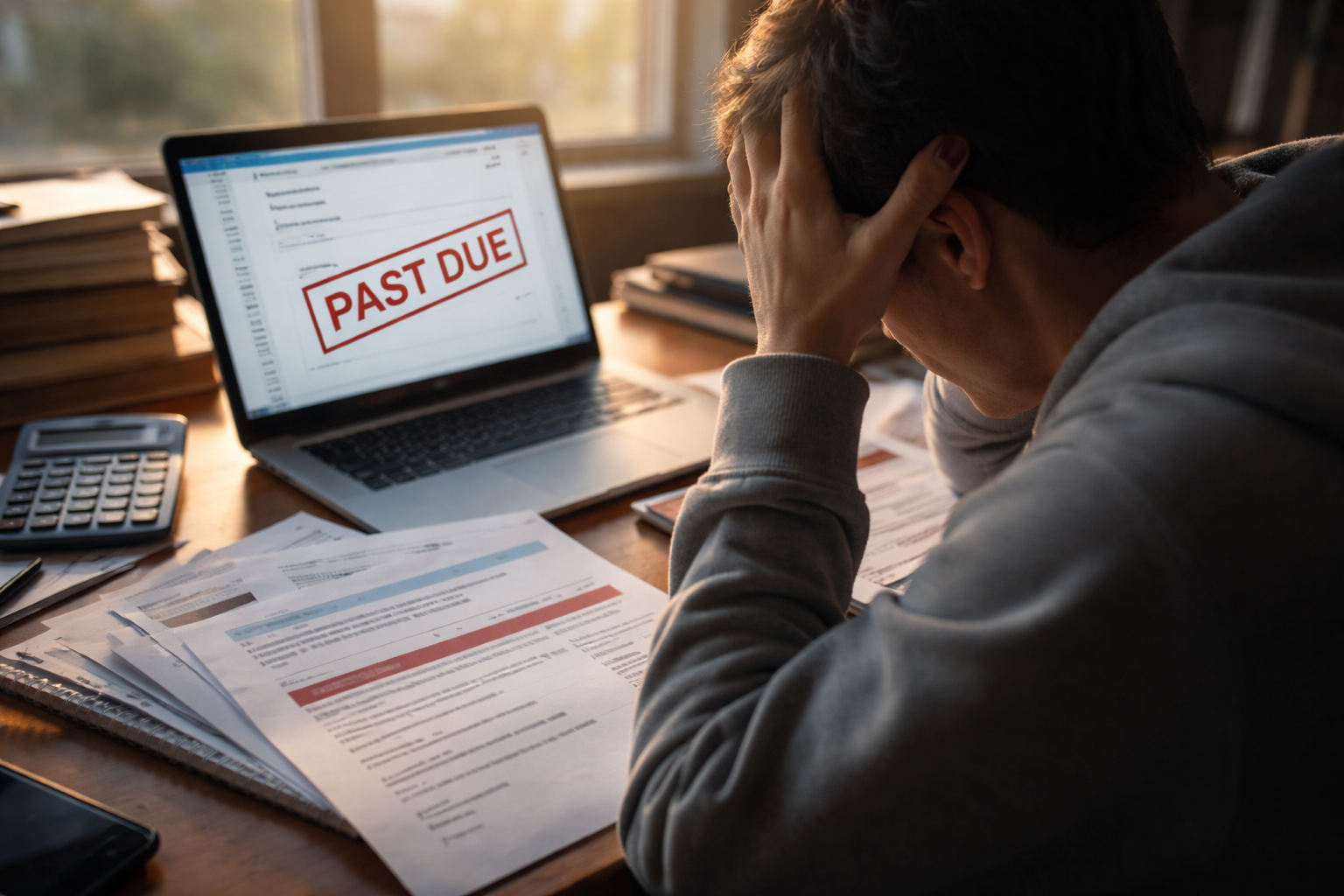
University Recalled Tuition from Collections After Payment. I didn’t even know that was a “thing” until a bursar rep said it like it should calm me down. I was on a U.S. college campus, phone pressed to my ear, watching my student portal spin and refresh. The collection agency had already confirmed the payment. I expected the balance to drop, the hold to lift, and the problem to be over. Instead, the portal still showed a hold and my registration window was ticking down.
What made it worse was how normal everyone sounded. “Yes, University Recalled Tuition from Collections After Payment,” they repeated, like that sentence automatically rewinds every consequence. It doesn’t. In college billing, recall is a handoff between systems—not a full cleanup. Once I understood that, I stopped waiting for “the system” to catch up and started asking for the specific proofs that actually unlock things.
Where This Fits in a U.S. College Billing Workflow
In a U.S. college setting, University Recalled Tuition from Collections After Payment usually happens after one of three triggers: the school receives funds, the school approves a settlement, or the school decides to bring the account back in-house to resolve holds and reconcile the ledger. The key point: collections status and student account status are not the same field. They’re often different ledgers and different teams.
If you want the simplest mental model for why portals don’t update “as expected,” this internal systems overview helps.
The One Sentence That Prevents 80% of Mistakes
When University Recalled Tuition from Collections After Payment, ask this immediately (and write it down): “Is the school ledger reconciled, and are the holds released, or was the debt only recalled?” Those are two separate steps. The recall can be real while the hold release is still pending.
It’s not paranoia. It’s how these offices protect themselves: the collections vendor closes their side, while the college verifies allocations, fees, dates, and term assignment. If anything doesn’t match, the account can sit in a “resolved externally, unresolved internally” limbo.
Case Branches After Recall
Below are the most common branches I’ve seen (and lived). If University Recalled Tuition from Collections After Payment, you should identify which branch you’re in before you do anything else. Your next step changes based on the branch.
You paid, the agency confirms, and University Recalled Tuition from Collections After Payment is confirmed—yet the portal still shows a balance due.
What’s usually happening:
- Payment is sitting in a “suspense” bucket until it’s applied to the correct term.
- Payment was posted, but to a different charge line (fees vs tuition).
- A collection surcharge or attorney fee exists on the school ledger.
- The school received funds, but has not run the end-of-day reconciliation.
What to ask for today:
- A line-item ledger (not just “balance”) showing which charges are still open.
- The transaction reference, posting date, and which term it was applied to.
- Confirmation whether a collection fee remains and whether it can be waived.
If you can’t get a ledger, you can’t prove what’s wrong.
This is one of the most frustrating outcomes after University Recalled Tuition from Collections After Payment: the money side looks fixed, but you still can’t register.
What’s usually happening:
- The hold is owned by the registrar or student services, not the bursar.
- The hold has a release SLA (24–72 hours) or requires a manual “hold review.”
- A separate “compliance” or “collections history” flag is still active.
- You have multiple holds—one cleared, one still blocking.
What to do today:
- Ask for the exact hold code/category and the owning office.
- Request a manual release review with “payment confirmed, recall completed.”
- Ask whether the hold is term-specific or global (transcript/graduation).
If you need a fast understanding of how holds behave inside colleges, use this guide before you call again:
University Recalled Tuition from Collections After Payment can resolve the debt but not the “release conditions.” Some schools keep transcript/diploma blocks until the account is fully audited.
What’s usually happening:
- Graduation clearance uses a separate checklist than registration.
- Third-party charges (housing, lab, program fees) are still open.
- A past-due indicator requires a compliance sign-off even at $0.
What to do today:
- Request written confirmation the account is “financially cleared.”
- Ask what department owns transcript release approval.
- Ask whether the school needs a “zero balance letter” on file.
This is the sneaky one: University Recalled Tuition from Collections After Payment happens, but the real funds weren’t your payment—they were late financial aid, a scholarship, or a third-party sponsor. That changes the paperwork you need.
What’s usually happening:
- Aid applied after the account was assigned out, triggering recall.
- Refund rules and overpayment rules now matter.
- The school may treat part of the balance as “institutional debt” even after recall.
What to do today:
- Confirm whether the recall was triggered by aid posting vs your payment.
- Ask if any refund is expected and whether it’s on hold.
- Ask whether aid was reduced because the balance was “already satisfied.”
If you suspect this scenario, this related piece helps you frame the questions properly:
Why “Recall” Doesn’t Automatically Clean Everything Up
When University Recalled Tuition from Collections After Payment, three different “clocks” can still be running:
- Posting clock: when the payment appears on the school ledger as applied (not just received).
- Hold-release clock: when the owning office clears the blocking code.
- Reporting clock: if the collection agency reported to credit bureaus, updates may lag behind status changes.
If you only watch the portal balance, you can miss the other two clocks completely. That’s how people get surprised later by a transcript block, a re-sent collection, or a “paid collection” still sitting on a report.
Credit Reporting: What You Should Verify (Even If You Hate This Part)
If University Recalled Tuition from Collections After Payment, verify whether the collection account was ever reported and what the current status is. Some people assume recall equals deletion. Often it doesn’t. It might update to “paid” rather than disappear.
For an official, neutral overview of how credit reports work and how to check them, use the Consumer Financial Protection Bureau’s guidance:
Official CFPB: Credit Reports & Scores
Don’t argue in generalities. Your questions should be specific:
- Was this account reported? If yes, on what date?
- Is the tradeline updating as “paid,” “closed,” or “deleted”?
- What name and account number is being reported (match it to your documents)?
If the school or agency is vague, ask for a letter confirming University Recalled Tuition from Collections After Payment and stating the account is closed with $0 due. Keep it. You may need it.
Your “Today Checklist” (Self-Apply in 5 Minutes)
Use this checklist the same day you hear University Recalled Tuition from Collections After Payment. Don’t wait for your portal to “look right.” Paper beats portals.
- Proof #1: Written confirmation from the school that the account was recalled and the school is the current servicer.
- Proof #2: A receipt or letter showing payment amount, date, and reference number.
- Proof #3: A student account ledger showing charges, credits, and open items (line-item).
- Proof #4: The exact hold code(s), owning office, and the release method.
- Proof #5: A zero-balance letter or “financial clearance” statement if you’re near graduation.
If any one of these is missing, that’s the gap that usually causes the problem to come back.
What to Say When You Call (Short Script)
Keep it calm, specific, and document-driven. Here’s a tight script that works after University Recalled Tuition from Collections After Payment:
- “Can you confirm the recall date and the current account owner?”
- “Can you email me the line-item ledger showing which charges are still open?”
- “What is the hold code blocking me, which office owns it, and what’s required to clear it today?”
- “If a collection fee remains, can you confirm the policy for waiving it after recall?”
Notice what’s not in the script: long explanations, emotional arguments, or “but I already paid!” The payment is the fact. Your job is to force the system to align around that fact.
When the School Says “Wait 3–5 Business Days”
Sometimes waiting is real. Sometimes it’s a polite brush-off. If University Recalled Tuition from Collections After Payment and you’re told to wait, ask one follow-up question that separates the two:
“What specific step is pending—posting, reconciliation, hold release, or document review?”
- If they can name the step and owner, waiting might be legitimate.
- If they can’t name the step, ask for escalation to a supervisor or a hold review queue.
Also ask for a timestamp: “When should I call back if the hold isn’t cleared?” Then write it down.
Absolutely Don’t Do These (They Backfire)
- Don’t stop checking the portal just because someone said University Recalled Tuition from Collections After Payment.
- Don’t rely on screenshots only. Ask for emailed confirmation or PDF statements.
- Don’t pay “random leftover amounts” without a ledger explanation (you can create new posting problems).
- Don’t miss your enrollment deadlines while waiting for a hold to clear—ask for a temporary enrollment override if your school offers it.
- Don’t assume your appeal file carries over unless someone confirms it (recall can reset queues).
If You Were in an Appeal When This Happened
University Recalled Tuition from Collections After Payment can happen mid-appeal, and that’s where confusion spikes: people think the recall means the appeal “worked.” Sometimes it did. Sometimes it didn’t. The difference is whether the underlying charge was adjusted or whether the school just moved ownership.
If your recall occurred while you were disputing the charge, keep your story straight by anchoring it to documents and dates. This related page helps you structure that scenario cleanly:
Recommended Next Step Before You Close This Tab
You’ve handled the recall. Now protect the future. If you want to prevent a repeat assignment to collections, this is the next most useful action-oriented read to take right after University Recalled Tuition from Collections After Payment:
Think of it as insurance: you’re learning the triggers that send accounts back out.
Key Takeaways
- University Recalled Tuition from Collections After Payment is a system handoff, not a full automatic cleanup.
- Portal balance, hold release, and reporting updates move on different timelines.
- Line-item ledgers and written confirmation are what actually resolve repeat problems.
- Identify your branch (balance wrong, hold stuck, transcript blocked, aid-triggered recall) before taking next steps.
- Act within days, not weeks—deadlines don’t pause for reconciliation.
FAQ
Does University Recalled Tuition from Collections After Payment mean my account is “done”?
It means the school brought ownership back in-house. You still need to verify posting, holds, and any remaining fees on the school ledger.
Why does my portal still show a hold if the balance is zero?
Because the hold may be owned by a different office or requires manual review. Ask for the hold code, owner, and the release process.
Can a collection fee remain after University Recalled Tuition from Collections After Payment?
Yes. Some schools assess a surcharge. Get a ledger and ask about waiver policy, especially if payment was prompt after notice.
What if the collection still appears on my credit file?
Recall does not guarantee deletion. Verify the status and keep written proof that University Recalled Tuition from Collections After Payment occurred and the account is closed/paid.
How fast should I act?
Same day if you’re facing registration, transcript, or graduation deadlines. “Waiting for the portal” is how people miss windows.
When I finally treated “University Recalled Tuition from Collections After Payment” as the start of a cleanup sequence—not the end—everything got easier. The hold didn’t lift because I refreshed the portal; it lifted because I got the hold code, identified the owning office, and asked for a manual release with the right proof attached.
If you’re in this U.S. college situation right now, do this today: request the line-item ledger, get written recall confirmation, verify the hold owner, and set a same-week follow-up time if it isn’t cleared. You are not asking for a favor—you’re asking the system to match the records. And you shouldn’t have to gamble your semester on whether an overnight batch job runs.